

A Breath of Fresh Air at Eifel National Park
There's something about stepping into a national park that instantly resets your pace. My recent trip to Eifel National Park in western Germany did exactly that - slowing everything down, in the best possible way, and reminding me how powerful it is to simply be outside.
It's worth knowing what a national park means in Germany, before I get into my personal experience. Unlike some countries where parks are designed for heavy recreation, German national parks are all about letting nature take the lead. The idea is "Natur Natur sein lassen" - letting nature be nature. Human intervention is kept to a minimum, ecosystems are allowed to evolve naturally, and conservation comes first. Visitors are welcome, of course, but always as respectful guests.
Eifel National Park sits in the North Rhine-Westphalia region, close to the Belgian border. It’s conveniently located near cities like Cologne, Bonn, and Aachen, which makes it surprisingly easy to reach. From Cologne or Bonn, you can drive there in about 1-1.5 hours. If using public transport, trains run to nearby towns like Kall or Heimbach, and from there buses connect directly to the park entrances. It's one of those places that feels remote and wild but without the hassle of getting there.
What makes Eifel special isn’t just its rolling forests and lakes - it's the story behind them. This area was once heavily used for military training which, oddly enough, helped preserve large sections of wilderness. Today, it's a protected haven for biodiversity, including rare species like wildcats and black storks.
There's ongoing conservation work across the park focused on restoring native forests, and protecting fragile habitats. You'll notice areas where nature is being allowed to regenerate naturally, without landscaping or interference. It's a refreshing shift from the manicured parks many of us are used to.
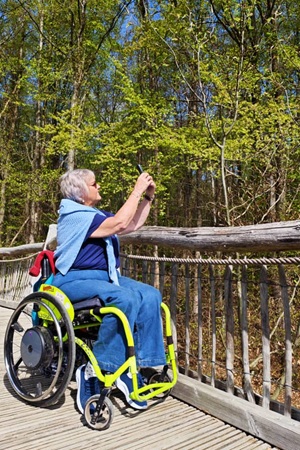
Trails for everyone (yes, really everyone) One of the highlights for me, and where it really stands out, is how accessible the park is. The barrier-free nature trail "The Wild Way" is a core part of that experience. It might sound rugged and challenging, but it's actually the complete opposite. The Wild Way is accessible, thoughtfully designed so that everyone can experience it, whether you're a confident hiker or someone with a physical disability, visual impairment, hearing difficulties, or learning differences. Over time, the surrounding landscape has grown wilder and more natural, but the trail itself has remained smooth and easy to navigate.
Along the route, ten highly interactive stations bring the wilderness to life, sharing insights into forest development, biodiversity, and the unique ecosystems of Eifel National Park. There are even boardwalks that guide you gently through forested areas, offering a closer look at nature without disturbing it. It's immersive without being overwhelming and genuinely one of the most inclusive outdoor experiences I've come across.
That feeling of reconnecting, the quiet - something I didn't realise how much I needed until I was in it. No city noise, no constant notifications, just wind through the trees and the occasional crunch of gravel underfoot. There's something grounding about being in a place where nature isn't curated for you. You start to notice small things: textures, smells, the rhythm of the environment. It's not dramatic - it’s subtle - but it stays with you.
Dreams of Wilderness: an exhibition that really stays with you. The park's visitor centre at Vogelsang IP (International Place) is home to the wonderfully named 'Dreams of Wilderness' (Wildnis(t)räume) Exhibition and it's far more than a typical visitor centre stop. Open daily from 10am to 5pm, this interactive, family-friendly exhibition has been welcoming visitors since 2016. 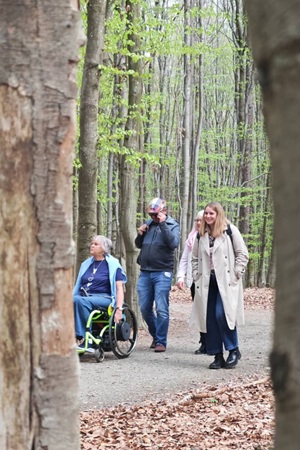
What I loved most is how multisensory it is. You don't just read information, you experience it. There are hands-on stations, models, and even stuffed animals you can touch, plant scents to smell, and audio installations filled with animal sounds. It's playful, but also genuinely informative. The journey begins with a walk 'from the crown to the root' of a beech forest, before moving through the water worlds of the Eifel and into the fascinating sensory lives of its wildlife. Along the way, you explore biodiversity, ecological cycles, and survival strategies until eventually zooming out to connect Eifel's ecosystems with those across the globe.
Content is offered in plain language, sign language, and audio description, available in multiple languages (German, English, French and Dutch), and accessibility is clearly a priority. A tactile paving system guides visitors through the seven sections, making it easy to navigate for those with visual impairments, while the entire space is wheelchair- and buggy-friendly. The exhibition has even been certified under the Tourism for All scheme, which reassures you that accessibility here isn't an afterthought, it's built in from the ground up.
More than just an exhibition - there's plenty to explore around the centre too. The wider Vogelsang IP site includes a historical documentation centre, a visitor hub with information and a shop, and a relaxed restaurant area if you fancy a break. And then there's the view. Whether you step outside or simply take it in from the exhibition's panorama room, the sweeping scenery over the Urft reservoir and surrounding forested hills is genuinely stunning, whatever the weather.
Practical touches that make a difference include the on-site café, which is a welcome pause after a few hours exploring. It's casual and relaxed, with simple food and drinks - nothing fancy, but exactly what you need. Facilities across the park are well thought out, including accessible toilets, which makes a huge difference for inclusivity. It's clear that visitor comfort has been considered without compromising the park's natural integrity. Guided tours and special programmes are also available, including options for school groups and younger children, making it a great destination for learning as well as relaxing.
Final thoughts - Eifel National Park isn't about big, showy landscapes or adrenaline activities. It's quieter than that; more reflective, more intentional - and honestly, that's what makes it special. It's a place where accessibility, conservation, and meaningful experiences come together seamlessly. Whether you're wandering along The Wild Way or getting lost in the Dreams of Wilderness exhibition, you come away with a deeper appreciation for the natural world, and your place within it.
For more information visit nationalpark-eifel.de